DotPe vs dineomAI: QR Ordering or AI Ordering
DotPe is QR ordering plus payments. dineomAI is AI ordering that chats in Indian languages and upsells. Here's which one fits your restaurant.
DotPe and dineomAI both start with a QR code on the table, but they do different things after the scan. DotPe shows your menu and takes the payment. dineomAI runs a chat that takes the order in five Indian languages and suggests a pairing. If you're choosing between them, the real question is whether you want a digital menu with checkout or a waiter that sells. Here's the honest comparison.
Key takeaways
- DotPe is strong at QR ordering and payments, and it's backed by Google.
- dineomAI is AI chat ordering: it talks in Indian languages and upsells on every order.
- DotPe shows a menu and processes the order. dineomAI has a conversation and nudges the ticket up.
- Neither charges aggregator-style commission, but the value you get differs at the table.
What DotPe does
DotPe began as a QR ordering platform and grew into payments and a full POS through its Rista product. A customer scans the code, sees your menu, places the order, and pays. You get a central order dashboard and customer data, which keeps you off the aggregators, whose commission runs 15 to 30 percent, and protects your margin. Pricing varies by plan and partnership, so confirm the current terms in writing before you commit.
In short, DotPe is a clean, capable way to let people order and pay from their phone. It's a strong tool for that job.
What dineomAI does
dineomAI is AI chat ordering. The customer scans and lands in a chat, not a menu grid. They type or speak in English, Hindi, Kannada, Tamil, or Telugu, including mixed phrasing like "ek paneer tikka and two rotis." They can ask what's less spicy or what goes with the biryani, and the assistant answers and takes the order.
The part that moves money is the upsell. After the customer adds items, the assistant suggests a pairing that fits the cart, the way a good waiter would. That tends to lift the average ticket by about 5 to 10 percent, which varies by menu and crowd, the simplest lever most kitchens have to increase average order value. There's no app download, and it's white-labelled, so guests see your brand.
DotPe vs dineomAI at a glance
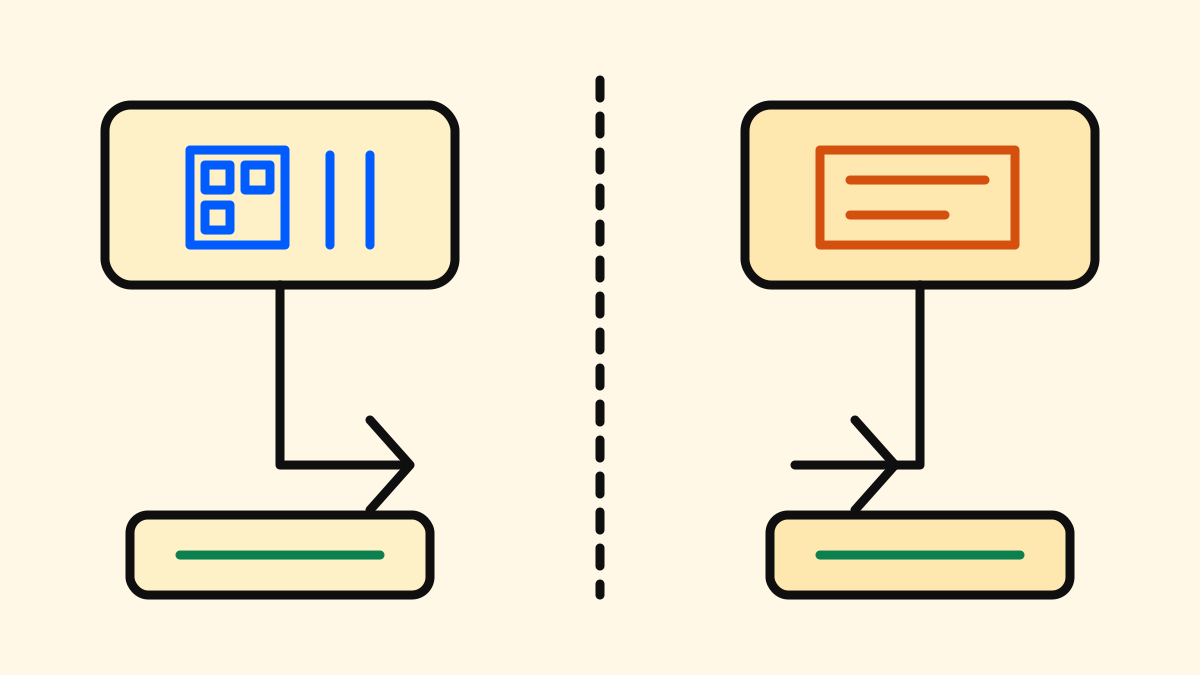
| Feature | DotPe | dineomAI |
|---|---|---|
| Core job | QR ordering and payments | AI chat ordering |
| Interface | Digital menu | Conversation |
| Indian languages | Limited | Five, including mixed speech |
| Suggests pairings | No | Yes, on every order |
| App download | No | No |
| Payments built in | Yes | Yes, or use your own setup |
| White-labelled | Varies | Yes |
The table makes the split clear. DotPe is the better-rounded payments and ordering stack. dineomAI is the better tool for talking to customers and selling at the table. For the full landscape, see our guide to QR code menu alternatives.
Which one should you pick?
It comes down to your bottleneck.
Pick DotPe if your priority is getting payments and direct ordering live in one stack, especially if you also want delivery and takeaway flowing through one dashboard. It's a sensible choice for an owner who wants ordering and checkout handled together.
Pick dineomAI if your tables turn slowly, your average ticket is flat, and a chunk of your diners would rather order in their own language than tap through an English menu. If the problem is selling and service, the conversation beats the menu grid.
Here's our take. A digital menu is still a menu. It waits for the customer to decide. A chat that suggests the right add-on at the right moment is the only one of the two that actively grows the bill. If revenue per table is the number you're chasing, that difference matters more than the checkout flow.
You don't always have to choose. Keep your payment setup and add AI ordering at the table. They don't fight each other. Neither DotPe nor dineomAI is a deep back-office biller, so if statutory GST filing across outlets is the piece you're missing, our roundup of the best restaurant billing software in India is the right next read.
Do you need both?
Plenty of restaurants run a payments stack and an ordering tool together, and there's no conflict in doing so. dineomAI can take the payment itself, by UPI, card, or cash, and bill it with GST, or you can keep your current checkout and use it purely to take orders and upsell at the table. The customer scans once, chats to order, and pays either way.
The thing to avoid is paying twice for the same job. If a tool already covers your payments and basic ordering well, you don't need a second one that does the same. What most dine-in restaurants are missing isn't another checkout. It's the conversation that answers questions and grows the bill. Add that piece, keep the rest, and you spend only on the gap you actually have.
A quick example
Think of a 60-cover restaurant in Pune with a long menu and a mixed crowd. With a digital menu, customers scroll, get overwhelmed, and order the safe dish. With AI chat ordering, a customer asks "what's good if I don't eat too spicy?", gets a real answer, and adds a dessert the assistant suggests. Over a busy weekend, those small nudges add up across hundreds of covers. That's the gap between showing a menu and selling from it.
FAQ
Is dineomAI a DotPe alternative?
For the ordering side, yes. Both replace a static QR menu with something interactive. DotPe leans into payments and a digital menu. dineomAI leans into conversation, Indian languages, and upselling. If your goal is selling more at the table, dineomAI is the closer fit. If it's unifying payments, DotPe is.
Does dineomAI handle payments like DotPe?
dineomAI takes the order, upsells a pairing, and bills it with GST, and it can either take the payment itself or work with the payment setup you already use rather than locking you into one. DotPe builds payments into its stack. If a single vendor owning your entire payments rail is your priority, weigh that difference carefully.
Which is better for Indian languages?
dineomAI is built for Indian languages and reads mixed speech like Hinglish or Kanglish. Most QR ordering tools, DotPe included, offer limited language support. If a large share of your diners are more comfortable ordering in Hindi, Kannada, Tamil, or Telugu, that gap shows up in every order.
Does either charge commission per order?
Neither works like a food aggregator that takes a large cut of each bill. dineomAI uses a flat monthly fee with zero commission on what it sells. DotPe's model shifts between per-order and flat fees depending on the plan and partnership, so check the current terms before signing.
For the numbers behind DotPe's per-transaction model, see DotPe pricing: what it actually costs.
What to do next
Decide what you're really buying: a payments-and-ordering stack, or a tool that sells at the table. If it's the first, shortlist DotPe and weigh it against the other big POS in our Petpooja vs DotPe guide. If it's the second, test AI chat ordering on a few tables and watch your average ticket for two weeks. Still weighing the broader options? Read our Petpooja alternatives guide or our DotPe alternatives roundup, then book a short demo to see AI ordering on your own menu.
See it on a real table
A 15-minute demo: watch dineomAI take an order, speak five Indian languages, and upsell the right pairing. No hard pitch.
Book a 15-minute demo →