Best Restaurant Billing Software in India
The best restaurant billing software in India includes Petpooja, Restroworks, and Gofrugal, each strong on GST billing but none built to sell at the table.
The best restaurant billing software in India comes down to a short list: Petpooja, Restroworks (formerly Posist), Gofrugal, LimeTray, and DotPe's Rista. Each prints a GST-ready bill, fires kitchen tickets, and keeps your tax records clean. The harder question isn't which one bills best. It's what billing software quietly leaves on the table, and the part of your revenue no biller is built to grow. Here's an honest read on the tools, then the gap most lists skip.
Last verified: 29 July 2026. Pricing, ownership, and branding shift fast in this space (Gofrugal is now part of Zoho; Posist rebranded to Restroworks in 2024), so confirm current terms with each vendor before you sign.
Key takeaways
- The established picks are Petpooja, Restroworks (formerly Posist), Gofrugal, LimeTray, and DotPe's Rista. All handle GST billing and kitchen tickets.
- Pricing splits two ways: a flat annual or monthly fee, or a model that takes a cut per order. Confirm the all-in number in writing.
- Billing software records the sale. It doesn't make the sale, answer a diner's question, or suggest a starter.
- The strongest setup pairs clean GST billing with an ordering layer that actually sells at the table, whether that's two tools or one system that does both.
What restaurant billing software actually does
A billing system, often sold as a restaurant POS, is the till and the paperwork. It rings up the order, splits the GST correctly, sends tickets to the kitchen, tracks stock, and gives you end-of-day reports. It's the system of record for every rupee that moves through the place.
That's real work, and you need it. But notice where it stops. The biller waits for an order to exist before it does anything. Someone, a waiter or the customer, still has to decide and place that order first. Billing software is excellent at recording a decision. It does nothing to shape one.
Keep that line in mind while you read. It's the whole reason this list ends where it does.
How to choose: five questions
Run any tool through these before you sign.
- Flat fee or per order? A fixed annual fee is predictable. A per-order or per-transaction cut climbs on your busiest nights. Price both at your real monthly volume, not the sticker.
- GST done right? It must split CGST and SGST, handle different rates per item, and produce a compliant invoice, in line with the GST rules.
- Does the order reach the kitchen cleanly? A bill that doesn't fire an accurate kitchen ticket just relocates the chaos.
- Cloud or local? Cloud billing lets you check sales from your phone and survives a dead terminal. Most serious tools are cloud now.
- What's support like at 9pm on a Saturday? A biller that's down means the restaurant is down. Ask other owners, not the sales deck.
The shortlist at a glance
| Tool | Type | Pricing model | GST billing | Best for |
|---|---|---|---|---|
| Petpooja | Billing POS | Flat annual fee | Yes | Single and multi-outlet dine-in |
| Restroworks (formerly Posist) | Enterprise POS | Plan-based | Yes | Larger chains and franchises |
| Gofrugal | POS plus inventory | License or subscription | Yes | Inventory-heavy kitchens |
| LimeTray | POS plus marketing | Plan-based | Yes | Owners wanting marketing tools too |
| DotPe (Rista) | QR ordering plus POS | Per-transaction plus gateway | Yes | QR ordering with payments built in |
Pricing and features shift by plan, city, and partnership, so treat this as a starting map and confirm the current terms in writing.
The honest notes on each
Petpooja is the one most Indian owners have heard of, and for good reason. It's a mature billing POS with a flat annual fee, wide hardware support, and a long integration list. If you want a dependable till that won't surprise you on price, it's a safe default. For who it suits and who it doesn't, see our Petpooja alternatives roundup.
Restroworks, which rebranded from Posist in 2024 as it grew into a wider restaurant technology platform, aims higher up the market, at chains and franchises that need central control across outlets. It's capable and priced for that scale, which can be more than a single cafe needs.
Gofrugal, now part of Zoho, leans hard into inventory and supply-chain detail. If your pain is stock and recipe costing more than the front counter, it's worth a look.
LimeTray bundles billing with marketing and online-ordering tools, which appeals if you'd rather have fewer vendors. Bundles can also mean paying for modules you never switch on, so map it to what you'll actually run.
DotPe, through its Rista product, comes at billing from the QR-ordering side and folds in payments. The trade-off is the pricing shape: it has leaned on a per-transaction fee plus a gateway charge. We weigh where that fits in Petpooja vs DotPe and DotPe vs dineomAI.
The part most lists skip: software that sells
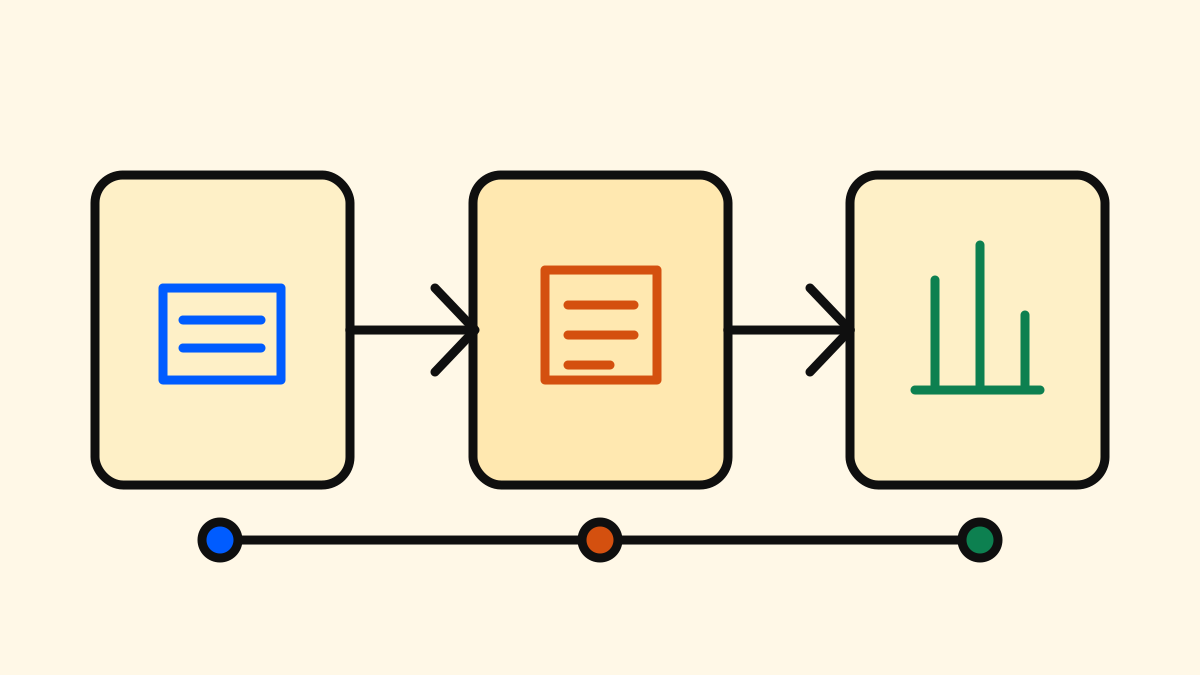
Here's the opinion we'll stand behind. Picking a biller is choosing how you record sales. It does nothing to grow them. Every tool above is excellent at capturing an order that already exists, and silent on the order that never got placed because nobody suggested it.
That gap has a number on it. Lift the average ticket by even 5 percent across a busy month and that's real money from the same covers and the same kitchen. A static menu and a slammed waiter miss the upsell on most tables. An ordering layer that talks to the diner doesn't.
dineomAI isn't on the billing list above because it comes at the problem from the other end. Instead of starting with the back office, it starts at the table: the customer scans a QR code, orders by chat in English, Hindi, Kannada, Tamil, or Telugu, asks what's less spicy, and gets a pairing suggested on every order. That nudge tends to lift the average ticket by about 5 to 10 percent, which varies by menu and crowd. Then it bills the order too, a GST-correct invoice with CGST and SGST split, food GST kept separate from liquor VAT, so ordering and billing sit in one white-labelled system rather than two. For deep back-office work like statutory GST filing across outlets you might still keep one of the billers above, but for taking the order and billing it cleanly, it's a single tool.
Keep a biller you trust for deep back-office work if you need one, or let dineomAI take the order and bill it in one place. Either way, the piece most lists skip is the one that sells at the table.
Which fits your size?
If you run a small cafe or a single outlet, don't overbuy. A flat-fee biller like Petpooja plus an ordering layer for the table works, and so does a single system like dineomAI that bills and takes the order together. Either covers most of what you need without an enterprise contract.
If you run multiple outlets or a franchise, the central reporting in Restroworks or Gofrugal starts to earn its cost. The extra spend pays off when you're reconciling a dozen kitchens, not one.
And if your real leak is delivery economics rather than the till, look upstream at aggregator fees. We tallied those in what Zomato and Swiggy commission really costs. For the wider view on table-side tools, our guide to QR code menu alternatives lays out the options.
FAQ
What is the best billing software for restaurants in India?
For most dine-in restaurants, Petpooja is the safe default: mature, flat-fee, and widely supported. Restroworks (formerly Posist) and Gofrugal suit larger or inventory-heavy operations, while DotPe's Rista folds in QR ordering and payments. The best pick depends on your size, your pricing tolerance, and whether you also need an ordering layer.
How much does restaurant billing software cost in India?
It runs either as a flat annual fee, often a few thousand to tens of thousands of rupees a year, or as a per-transaction cut on each order. Flat fees are predictable, while per-order models climb as you get busier. Hardware, add-on modules, and payment-gateway charges are usually extra, so confirm the all-in number in writing.
Is there free restaurant billing software?
Free and freemium tiers exist, but they're usually capped on outlets, items, or reports, and some recover the cost through per-order or payment fees. For a real restaurant doing daily volume, a paid flat-fee plan is often cheaper over a year than a free tool with transaction charges. Read the fee schedule, not just the headline.
Does restaurant billing software handle GST?
Yes. Any serious tool produces GST-compliant invoices, splits CGST and SGST, and supports different tax rates per item. Our free restaurant bill format generator shows the layout a compliant bill should follow, including a bar bill that keeps liquor VAT apart from food GST. Verify it on your own menu before you commit, especially if you serve items taxed at different rates or sell alcohol, which often carries separate VAT.
What's the difference between billing software and an ordering system?
Billing software records and charges for an order that already exists. An ordering system takes the order in the first place, and an AI ordering layer also answers questions and upsells. Most restaurants need both jobs done, clean GST billing and an ordering layer that sells, and some tools now do both in one, like dineomAI, which bills with GST and takes the order together. See our DotPe vs dineomAI comparison.
If your question is really about the box on the counter rather than the software on it, see restaurant billing machine: what you actually need.
Pricing the market leader specifically? Petpooja pricing: what it actually costs covers the quote-on-request problem and the add-on list.
Looking hard at the market leader? Our Petpooja review goes through the verified user ratings and the recurring complaints.
What to do next
Start by naming your real gap. If you just need a dependable till and clean GST, shortlist Petpooja, Restroworks, or Gofrugal and price each at your actual monthly volume. If your tables turn slowly or your average ticket is flat, the biller isn't the fix. Add an ordering layer that sells, whether alongside the billing you already trust or as a single system that does both, and test it on a few tables for two weeks. Book a short demo and watch the average ticket move on your own menu.
See it on a real table
A 15-minute demo: watch dineomAI take an order, speak five Indian languages, and upsell the right pairing. No hard pitch.
Book a 15-minute demo →