Ordering System for Bars and Pubs: Sell More Rounds
An ordering system for bars and pubs lets guests reorder rounds from their phone, so you pour more drinks during the rush without anyone waving down the bar.
An ordering system for a bar or pub lets guests order and reorder from their phone instead of waving down a bartender who's three-deep in tickets. On a busy Friday, the thing standing between a guest and a second round usually isn't the drink. It's getting someone's attention. A fast pub ordering system closes that gap, so you pour more rounds, turn tables faster, and keep the night moving. If you've been hunting for a drink ordering app for your bar or pub, the better answer is one your guests never have to install. Here's how a QR and chat ordering system works for bars and pubs, what to look for, and the honest trade-offs around serving alcohol.
Key takeaways
- A bar ordering system lets guests order rounds from their phone, with no waiting to flag down staff.
- The bottleneck on a busy night is getting served, not the drink itself. Remove it and you sell more rounds.
- Drinks are your highest-margin line, so nearly every extra round you capture drops to the bottom line.
- It complements bartenders and table service rather than replacing them, and staff still serve and check age.
Why a bar loses money during the rush
Picture a packed pub on a Friday. A table finishes their first round and they're ready for another. But every server is slammed and the bar is three-deep, so they wait. Five minutes, ten. Some flag down a server eventually. Some give up and call it a night a round early. That gap between "ready for another" and "served" is revenue walking out the door.
It stings more at a bar than anywhere else because of the margins. Drinks are the most profitable thing you sell, far more so than food. Industry figures tend to put a bar's profit margin in the low double digits, and thinner once a kitchen is involved, which means the easy money is in the pour. Every round you miss during the crush is high-margin revenue you simply didn't capture.
The rush is also where it counts most. Weekends carry the night, so the few hours when your staff can't keep up are precisely the hours that make or break the week.
How a bar ordering system works
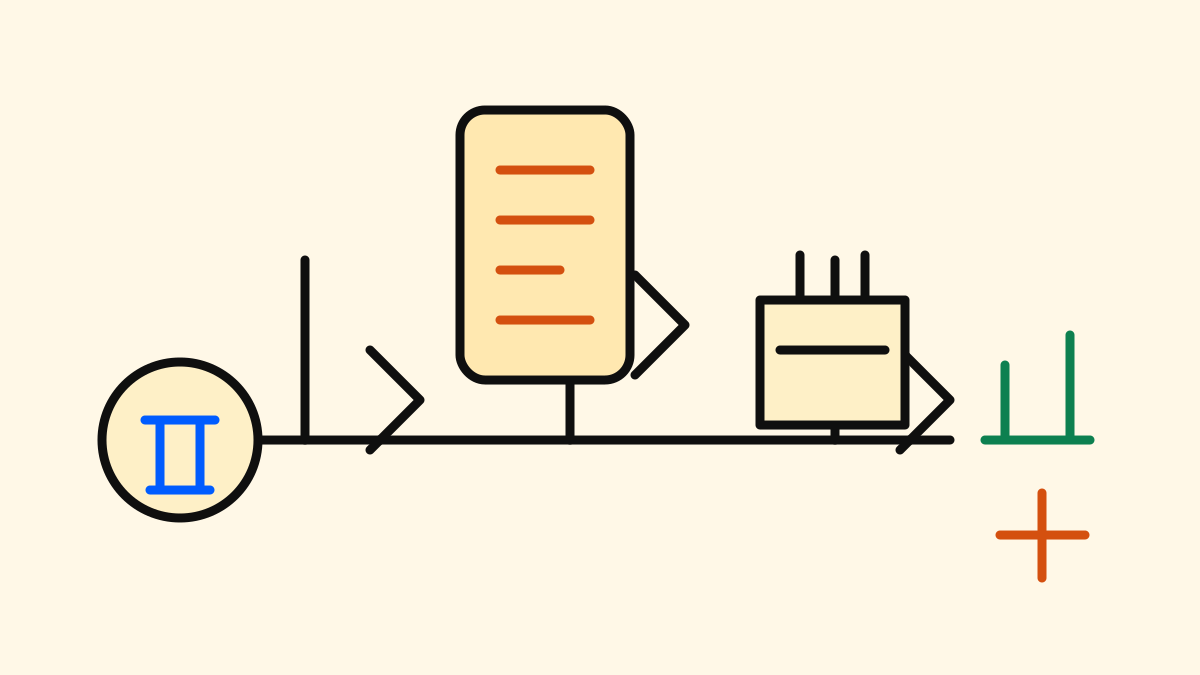
The flow is simple. The guest scans a QR code on the table, orders from their phone, and the order goes straight to the bar or kitchen. Staff still bring the drinks over. You've removed the chasing-down step, not the service.
A basic version shows a digital menu and takes payment. A smarter one uses AI chat ordering: the guest orders in their own language, asks what's on tap or what's not too strong, and gets a snack or a premium pour suggested with the round. Reordering is two taps, which is the whole point at a bar. There's no app to download, which matters when someone's three drinks in and not about to install anything.
Do you need a drink ordering app for your bar?
A drink ordering app for a bar lets guests order and pay for rounds from their phone instead of queuing at a packed bar. Here's the catch worth knowing before you buy one: at a bar, the best version isn't an app at all.
Think about the moment. Someone's two rounds in, the music's loud, and they want another beer. Ask them to find your app in a store, download it, and set up an account, and you've lost the round you were trying to win. Every install screen is a place to give up.
A browser-based drink ordering system gets you the same result without the friction. The guest scans the QR on the table, orders a round in their phone's browser, and it lands at the bar. No download, no login, no lost round. So when people search for a drink ordering app for pubs, what actually works on a busy floor is scan-to-order that behaves like an app but skips the install. dineomAI runs exactly this way.
What it actually does for the night
A handful of things, and they stack.
More rounds. This is the big one. When reordering doesn't depend on catching a busy server, tables order again when the mood takes them, not when staff finally free up. Studies of self-service ordering back this up: a Tillster and SSI study of 2,000 diners found self-service lifts the average check, largely because the prompt to order again is always there.
Faster turns. The same dead time that costs you a round also keeps a table sitting longer than it needs to. Removing it helps you turn tables faster during a rush without rushing anyone, since the meter only moves on the waiting, not the drinking.
Bigger tabs. A good system suggests the pairing a sharp bartender would, a plate of wings with the pitcher, the single malt over the standard pour. That's the same lever behind growing the average order value, applied to the bar.
Calmer staff. When guests place their own reorders, your team spends the rush serving and reading the room instead of sprinting to take orders. The bar experience gets better, not more mechanical.
The honest trade-offs
This is where bars need a clear head, because alcohol isn't a plate of fries.
Age and responsible service stay human. An ordering system takes the order. It should not be the thing that decides whether a person gets served. Staff still carry the drink over, and that's the moment to check ID and judge whether someone's had enough. India's legal drinking age varies by state, and the responsibility sits with the venue, so keep a person in that loop. Use the system to remove the wait, not to automate pouring alcohol to whoever taps a screen.
It complements the bartender, it doesn't replace the craft. At a cocktail bar, the bartender's recommendation is half the product, and you wouldn't want to lose that. The sweet spot is using chat ordering for the reorders during the crush, the rounds that would otherwise be lost to the queue, while keeping the bar interaction for everything else.
It isn't right for every table or every venue. A loud sports pub on match night is a perfect fit. A quiet whisky lounge may want it only as an option. Read your room.
What to look for in a fast pub ordering system
Run any option through these.
- Fast, two-tap reordering. The first order can take a minute. The second should take seconds, or you've missed the point.
- It routes to the right place. Drinks to the bar, food to the kitchen, automatically. A single queue slows both.
- It handles alcohol and tax correctly. Drinks often carry their own tax treatment, so the bill has to be right out of the box.
- Indian languages. A mixed crowd orders more freely in Hindi, Kannada, Tamil, or Telugu than in an English-only grid.
- No app download. Browser-based ordering only. Every install screen loses someone.
- It bills too, or works with your existing till. dineomAI can take the order and bill it with GST in one system, food GST kept separate from liquor VAT, so you don't have to run two tools. If you'd rather keep the till you have, it also works alongside it, since taking the order and taking payment can be one job or two.
A worked example
Put rough numbers on it. Take a 25-table pub on a Friday night. Say removing the reorder wait gets just one extra round onto half of those tables over the evening, at around ₹500 a round.
That's roughly ₹6,000 more on the night, from drinks you already had chilled and ready to pour, with no new staff and no new tables. Now repeat it across every busy weekend, and add the snack or premium pour the system suggests along the way. The rounds you were quietly losing to the queue are the cheapest sales you'll ever make, because the cost was never the drink. It was the wait.
Selling more rounds only pays if the pours themselves are honest. If you've never checked what a bottle actually yields against what it should, start with how to calculate pour cost for an Indian bar; a bar leaking 15 percent to over-pouring gives back most of the extra round it just earned.
FAQ
How does QR code ordering work in a bar?
Guests scan a QR code at their table, order drinks and food from their phone, and the order goes straight to the bar or kitchen. Staff bring it over. Reordering takes a couple of taps, so a table can call for another round the moment they want one instead of waiting to catch a busy server during the rush.
Is there a drink ordering app for bars and pubs?
Yes, though the best option for a bar isn't one guests download. A browser-based drink ordering app lets them scan a QR code and order a round from their phone with no install and no account. That matters when someone's a few drinks in, because every download screen is a chance for the order to be abandoned.
Can customers order alcohol with a QR code?
They can place the order, but a person should still serve it. Age verification and responsible service stay with your staff, who carry the drink over and check ID where needed. India's drinking age varies by state and the venue carries the responsibility, so the system speeds up ordering without taking humans out of serving alcohol.
Does a bar ordering system actually increase sales?
Usually, yes, because it removes the wait that costs you rounds during a rush. Drinks are high-margin, so each extra round captured is close to pure profit, and a system that suggests a snack or a premium pour lifts the tab further. Studies of self-service ordering consistently report higher average checks for the same reason.
Will it replace my bartenders?
No, and it shouldn't. The point is to handle reorders during the crush so your team can focus on serving, recommending, and reading the room. At a cocktail bar especially, the bartender's craft is part of what guests pay for. Use chat ordering to remove the queue, not the people.
Does it work in a loud, busy pub without an app?
That's exactly where it shines. Ordering runs in the phone's browser with no app to install, which matters when guests are a few drinks in. On a loud, packed night, letting people order from their seat instead of shouting over a three-deep bar is the difference between a captured round and a lost one.
What makes a pub ordering system fast during the rush?
Speed comes from three things: two-tap reordering, browser ordering with no app to install, and orders that route straight to the bar. A guest calls for another round from their seat in seconds, and it lands with the bartender without anyone crossing a packed floor. That's what a fast pub ordering system is really for on a busy night.
What to do next
Watch your bar on the next busy night and count the tables waiting to reorder. Those are the rounds you're losing, and they're the easiest money in the room because the drink was never the problem. Add an ordering system that makes the second round a two-tap job, keep your staff serving and checking age, and let the system suggest the pairing. The same reorder logic sells the second coffee at a cafe too, and fills tabs across bar districts like Bengaluru's Indiranagar, where Bangalore restaurants were early to QR ordering. For the bigger picture, see our guide to QR code menu alternatives, then book a short demo and watch how many more rounds the same night can hold.
See it on a real table
A 15-minute demo: watch dineomAI take an order, speak five Indian languages, and upsell the right pairing. No hard pitch.
Book a 15-minute demo →